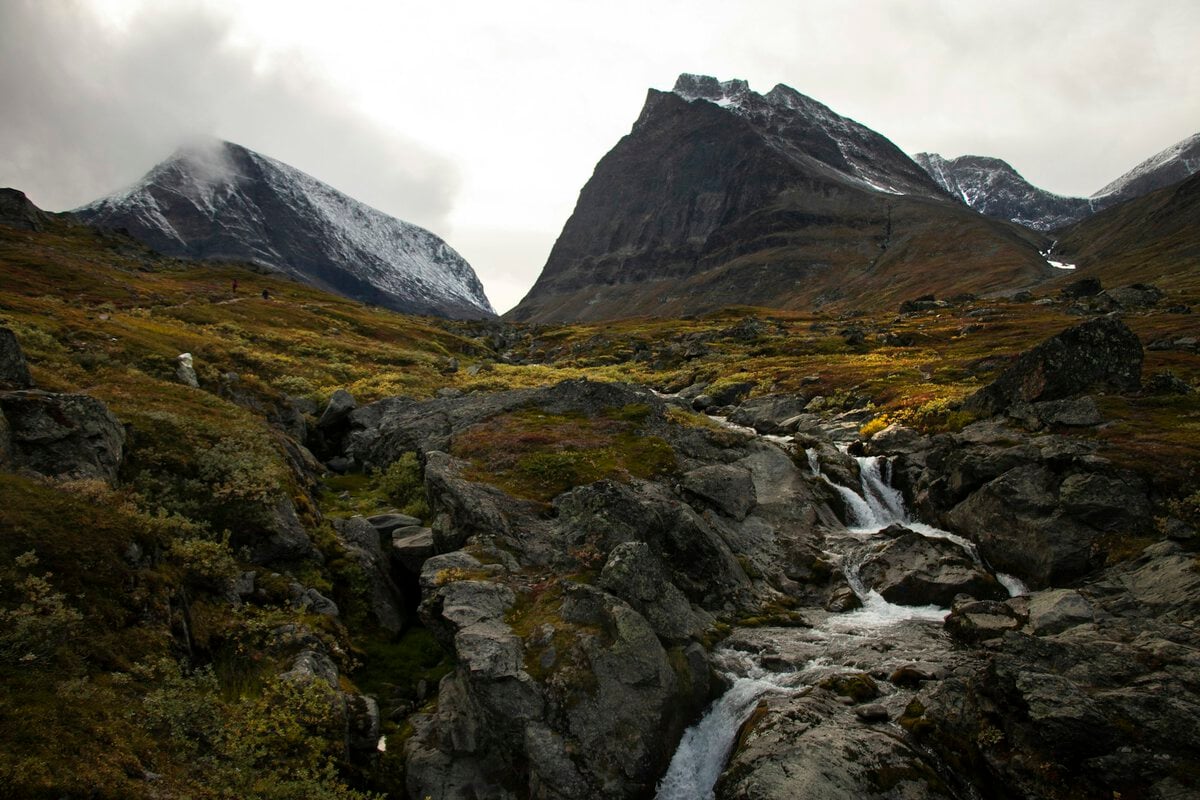
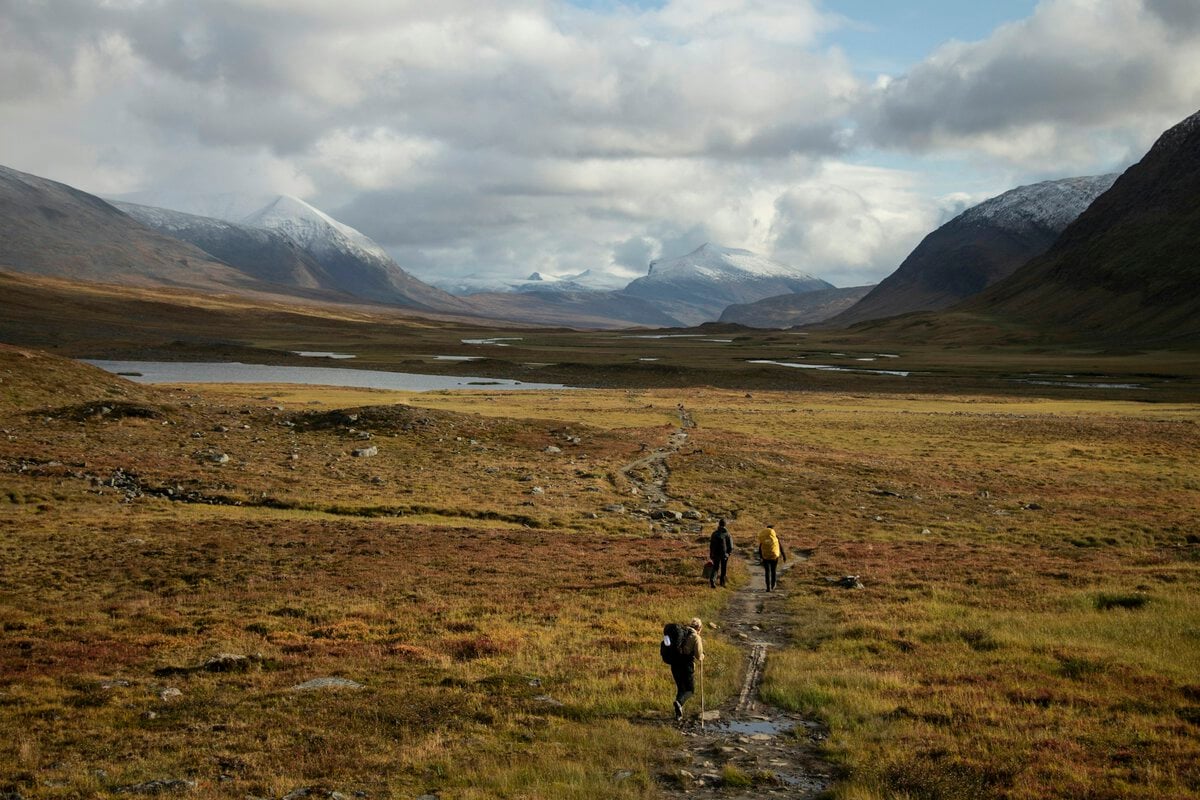
For most of the walk, there is no lake. There is a wide valley, a rocky trail, and boulders the size of houses left behind by glacial activity. Then you climb the last rise, and Trollsjön is suddenly there beneath the mountains.
The Trollsjön hike runs through the Kärkevagge valley near Abisko in Swedish Lapland. We guide it as a full day: around 11 kilometers return, with about 400 meters of elevation gain. Here is what the day involves, why the distance on paper misleads people, and how to prepare so the lake at the end feels earned.
Hike to Trollsjön With an Abisko Adventure Guide
Abisko Adventure runs the hike in this story as a guided full day, with transport from your accommodation in Abisko or Björkliden to the trailhead near Låktatjåkka and back.
Good to know
Route: about 11 km return with around 400 m of elevation gain, six to eight hours in total
Included: a qualified guide and the transport
Bring: your own lunch, proper hiking boots, waterproof and warm layers
Age: from 10 years, and under 16s hike with a paying adult
Price: from SEK 1,595 per person, current prices on the booking page
Check dates for the guided Trollsjön hike →
This section contains partner links. If you book through them, we may earn a commission at no extra cost to you. We only feature partners whose services we believe add genuine value for travelers.
The Day Begins at the Trailhead
We pick guests up from their accommodation in Abisko or Björkliden and drive west to the trailhead near Låktatjåkka. Before anyone takes a step, the guide explains the route, the conditions expected that day, and how the group will move through the terrain safely.
That briefing matters more than it sounds. The path ahead is rocky and uneven, and the weather can shift within an hour.
At the start, the entrance to Kärkevagge opens wide in front of you, framed by steep mountain slopes. The lake is several kilometers ahead and completely out of sight.
Walking Through Kärkevagge
Kärkevagge means “rocky valley,” and the name fits. The trail runs between enormous boulders scattered across the valley floor, all deposited by glaciers, and you spend hours walking among them.
What You Hear and Smell
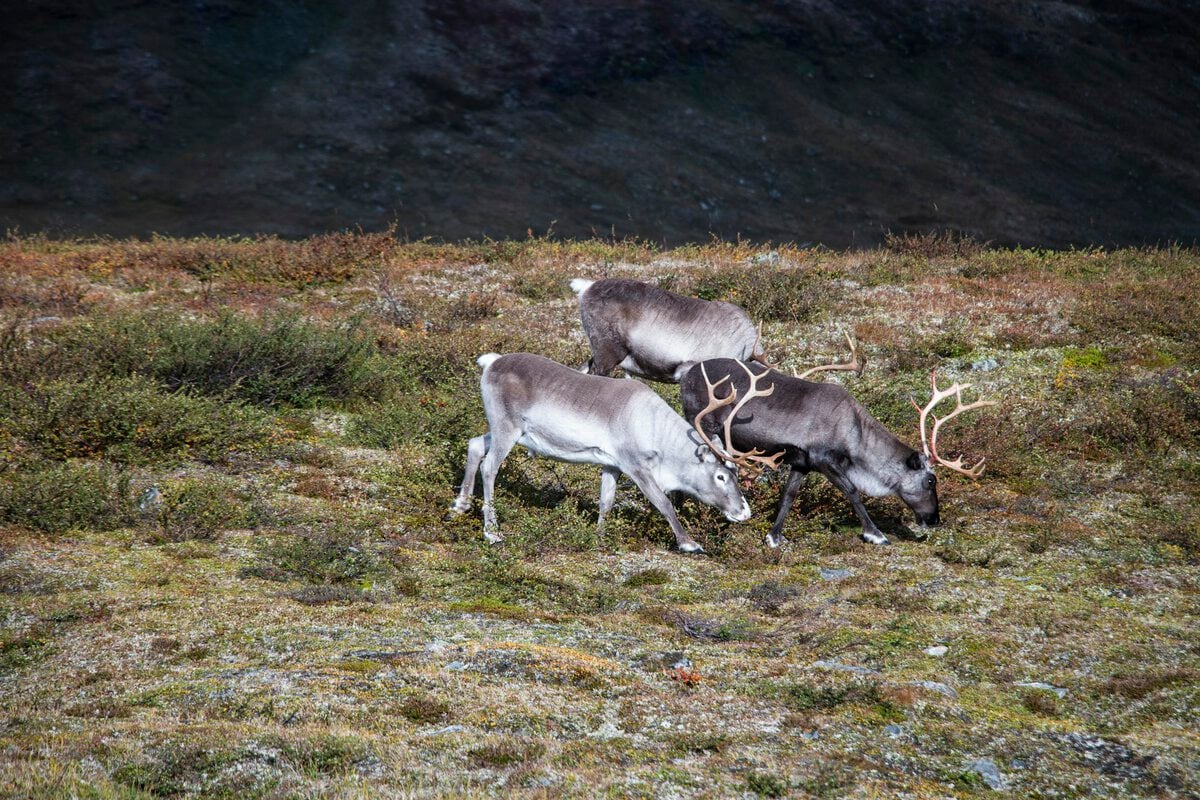
Much of the valley is quiet. You hear wind, your own footsteps on the stones, and water running down from the mountains. Birds such as ptarmigan and mountain pipits call across the slopes, and now and then reindeer move along the hillsides above the trail. If you meet a herd, keep your distance so the animals aren’t disturbed.
The air often smells of wet rock, dwarf birch, and mountain vegetation. On suitable days, the streams are clear enough to refill your water bottle.
The Guide’s Role on the Trail
Our qualified guides have experience leading groups in Arctic mountain terrain, and they do more than point the way. They read the weather and the condition of the trail and set the pace for the group. As you move deeper into the valley, they stop to talk about the geology, the plants, the wildlife, and the changing Arctic conditions.
Those stops are also natural rests. A long, steady approach goes better when the pace adapts to the people in the group.
The First View of Trollsjön
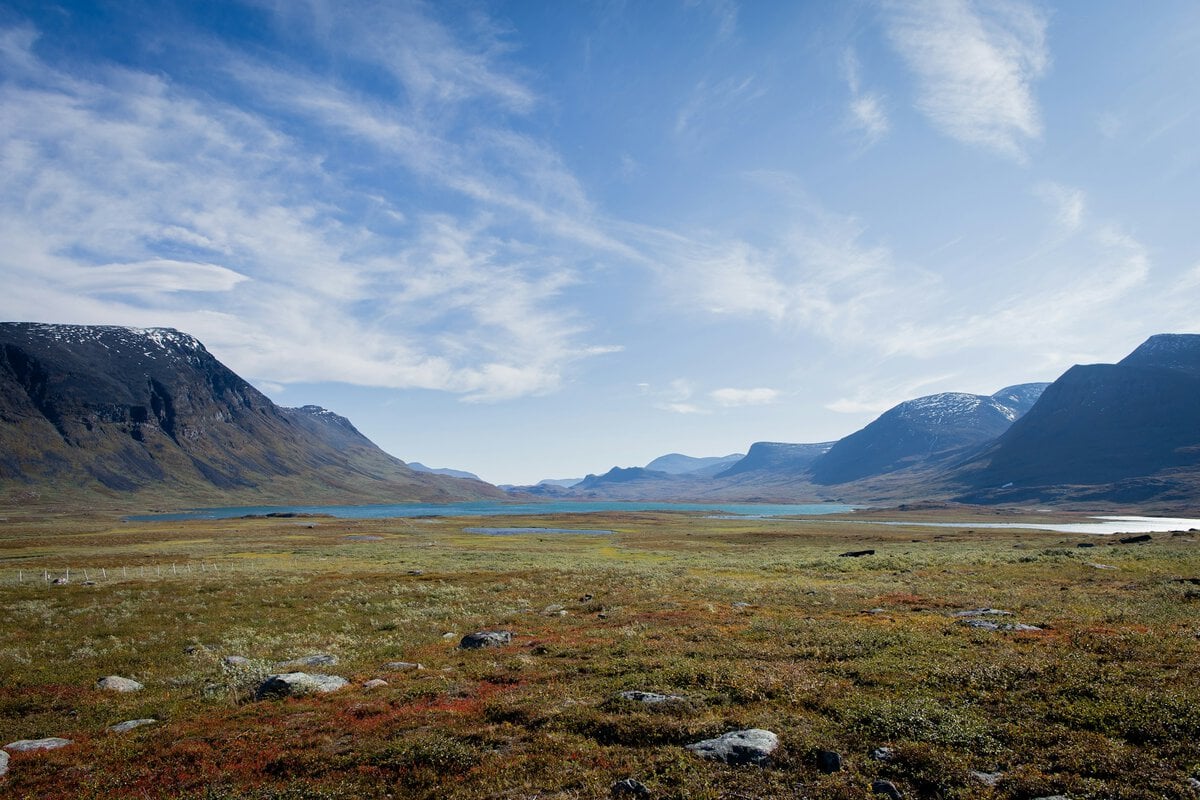
This is the moment our guests talk about afterward. Near the far end of the valley, beyond the last rise, the lake comes into view below the surrounding mountains.
We see the same reaction again and again. People stop walking. They look at the color and clarity of the water, and they start taking photographs before anyone suggests continuing down to the shore.
Because the lake stays hidden for most of the approach, the view lands all at once. You’ve spent hours among rock and wind, and then the water is there.
Lunch at the Shore
The group walks down to the water and takes a longer break. Everyone eats the lunch they’ve brought, and there’s time to explore the shore. Swimming is off the table here: the lake has a sensitive ecosystem, and the local visitor guides ask hikers to stay out of the water.
Light and Changing Color
Trollsjön is a glacier-fed mountain lake. According to Kiruna Lapland, it has a measured visibility depth of around 34 meters, the clearest of any lake in Sweden. It lies inside the Låktatjåkka Natura 2000 area, which protects the valley and the lake.
Many maps and tour operators call the lake Rissajaure, and our guides translate its Sámi name, Rissájávri, as “the lake that glitters like fire,” for the way the water catches changing light. On the day, you can watch that happen. As sun, cloud, and wind pass over, the color and visibility of the lake shift noticeably.
Why 11 Kilometers Is Misleading
Trollsjön is often presented as an easy excursion from Abisko because the route is only about 11 kilometers. The municipality’s own trail guide puts it at around 12 kilometers return with roughly 350 meters of climbing. Either way, the number leaves out most of what matters.
The terrain is uneven and sometimes wet. The route climbs roughly 400 meters on our count. And the weather can change faster than most guests expect: sunshine, wind, low cloud, and rain can all pass through the valley in the same hike. The day may start calm and mild, then turn cold, windy, or rainy higher in the valley. On clear stretches, the sun can feel surprisingly warm.
Together, these make it a proper full-day mountain hike. Plan on six to eight hours, depending on the group, the weather, and trail conditions.
How It Differs From Hiking in Abisko National Park
The lake is near Abisko but outside Abisko National Park. That surprises people who read the name in Abisko trail resources and assume it’s part of the park’s network of routes.
The experience is different too. Abisko Valley and sections of Kungsleden offer their own kinds of hiking. The Kärkevagge walk is built around one idea: a long approach through a remote, boulder-filled Arctic valley, ending at a lake you can’t see until the final rise. If you want something shorter or gentler, talk through the options with a local guide before you choose. In winter, the same area is known for aurora nights, and we’ve written about how to get the most out of a northern lights tour and an evening walk with huskies near Abisko.
Practical Information
When to Go
Summer and autumn are the seasons for this hike. The lake is normally free of ice from the end of June to September, and July and August are the most reliable months. Conditions vary within each season, so the guide’s read on the day decides how the group moves.
Getting There
Pickup is from your accommodation in Abisko or Björkliden. The drive west to the trailhead near Låktatjåkka is included in the day, and the guide drives you back afterward. For more ideas around the country, see our Sweden travel tips, including a 20-day wilderness hike through Sarek National Park for a much longer route.
Fitness and Terrain
Expect about 11 kilometers return, around 400 meters of elevation gain, and uneven, sometimes wet ground. The walk suits adventure seekers, nature and wildlife lovers, and couples who are comfortable with a full day on their feet.
What to Bring
- Proper hiking footwear
- Waterproof and warm layers
- Enough food and water for six to eight hours, including lunch for the break at the lake
A guide adds local knowledge and judgment, but each person still has to arrive prepared for a day in Arctic mountain terrain. Dress for several kinds of weather in the same hike, because you may get them.
Frequently Asked Questions
Is Trollsjön inside Abisko National Park?
No. The lake is near Abisko, but it sits outside the national park, in the Låktatjåkka Natura 2000 area. The trail starts near Låktatjåkka and runs through Kärkevagge.
How long does the Trollsjön hike take?
The full guided experience normally takes six to eight hours, including the drive from your accommodation, the guide’s briefing, and the longer lunch break at the lake. The exact time depends on your group, the weather, and trail conditions.
How difficult is the Kärkevagge hike?
It’s more demanding than the 11-kilometer distance suggests. The route has about 400 meters of elevation gain, and the ground is uneven and sometimes wet. Weather can also turn cold, windy, or rainy higher in the valley.
What should I wear for the hike to Trollsjön?
Wear proper hiking footwear and bring waterproof and warm layers. Even a mild morning can turn cold higher up, and clear stretches can feel warm in the sun. Layers let you adjust as the valley changes.
Can you swim in Trollsjön?
No. The lake’s ecosystem is sensitive, and visitors are asked not to swim so the water and shoreline stay undisturbed. Enjoy it from the shore during the lunch break.
What is the Sámi name for Trollsjön?
Many maps and operators use Rissajaure, and our guides know it as Rissájávri, “the lake that glitters like fire.” Kiruna’s visitor guide gives the Sámi name Geargejávri, “stone lake,” and calls the valley Geargevággi, “stone valley.” Both point to what you walk through and what you find at the end.