Note: This story contains spoilers from “A Different World” Season 1.
Netflix’s “A Different World” reboot introduces viewers to the next generation of students at fictional HBCU Hillman, anchored by Deborah (Maleah Joi Moon), the youngest child of Whitley (Jasmine Guy) and Dwayne (Kadeem Hardison), who reprise their roles from the original sitcom.
What to know about A Different World Creator Explains Those Finale Twists
Deborah gets a crash course to Hillman alongside a fresh crop of freshmen that quickly bonds them together, and, as is the case at a college campus, romances are sparked left and right. But, by the end-of-the-year gala in the Season 1 finale, nearly all of those couples are torn apart.
It’s even more complicated than that for Deborah, who tries to find her way back to Shaquille (Cornelle Young IV) — despite the fact that he hooked up with her RA Candace (Renee Harrison) — but has the double whammy of finding out not only that he block her, but he’s said to be transferring out of Hillman.
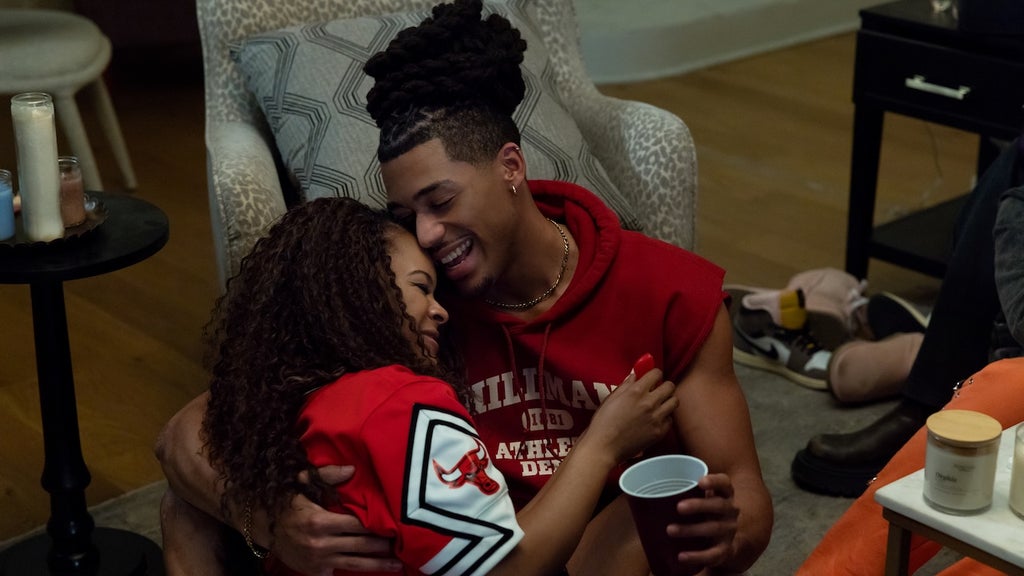
“I think that put her in the headspace of, ‘I think it’s over,’” showrunner Felicia Pride told TheWrap, explaining that by the time she gets to her dorm room and sees Ellington (Vincent Jamal Hooper) making a rose-filled romantic gesture, she can only think, “here’s Ellington in front of me … acknowledging how he feels about me and I have feelings for him too.’”
But that doesn’t mean Shaquille is out of the picture forever, with Pride saying, “I think you can write yourself out almost anything, including death if you have ever watched soap operas.” “We were very specific about how we wrote all these cliffhangers so that we had different options on how we could get out of them,” she said.

It’s not just Deborah who struggles with romantic woes in the friend group (more on that below), but things take a much more serious turn for Ghanian-Nigerian student Kojo (Chibuikem Uche), who is approached by an ICE agent asking for his papers.
“The ICE storyline was something that we really wanted to pursue and make sure that we got right,” Pride said, noting the seeds planted about ICE starting at convocation when Dwayne says “they want to deport us” to Kojo’s parents. “Having him approached on campus is real because there certain campuses where administration has allowed ICE to be on campus … we wanted to address that.”
The presence of ICE is just one of the issues plaguing HBCUs that are raised and discussed in “A Different World,” with Pride noting political consciousness was a non-negotiable for herself and Debbie Allen, who returns as a director and EP. It was Allen who brought on Pride to the project after working with her on “Grey’s Anatomy.” The conversation below has been edited for length and clarity.
TheWrap: Why did it feel like the right time to revive “A Different World?”
Pride: [Debbie Allen] said something that really felt like an urgent charge in the moment, which was “now’s the time to hear from young America, especially young Black America.” That was something that I could definitely get with because I was hesitant, of course … I grew up on the show in real time — the legacy of the show, the responsibility — but … I felt that charge that she made.
How did you want to balance having so much of the original cast back while welcoming in the next generation?
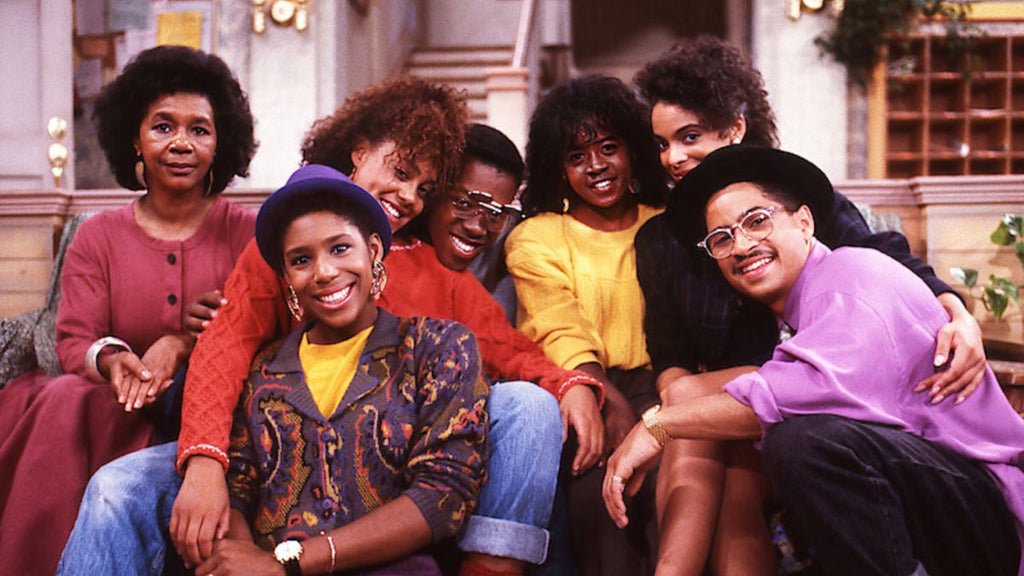
Debbie was keeping the legacy cast warm, as she likes to say, because they were trying to make the show in different ways, [with] different folks for years. So once it seemed like we were going to do it, the legacy cast was really, really excited. For me, it was about finding organic ways for them to be attached to our new brilliant cast … but also to have our legacy cast have organic relationships to Hillman, so that they could be around in organic ways. So we see Dwayne as provost, Whitley’s on the board, Ron because his son, Freddie is a professor.
“A Different World” fits into Netflix’s slate of YA-centered shows. What conversations did you have about tone with Netflix?
We definitely worked a lot on the tone. It is different from the original. It’s not a straight sitcom with set-up to joke. It’s more of a dramedy where we have high moments of drama, and then we have these laugh-out-loud moments. [We wanted to] focus on the relationships of these young folks, and what it feels like to be young and at a HBCU today was really important to us. We established an HBCU council that was like an advisory board of sorts for the writers’ room, and we also replicated that on set. We had current HBCU students on set that we could ask questions to, ask about their experiences, because that was really what was important for us for the YA-ness of it all to make sure that it felt relevant and authentic.
The show was filmed at several different HBCUs. Why was that important for you?
Key context and latest developments
In the move from multicam to single cam, it really allowed us to have a more immersive experience at Hillman and see Hillman in ways that we never had previously, so we had the pleasure to film at Spellman, Morehouse and Clark, and that gave us just the texture and opened up our world in such beautiful ways. But it also helped with our authenticity because 59% of our background were current HBCU students and alum, and so when we’re in these scenes, we feel the authenticity of these current students because they know what it is to be at school today.
We actually did a casting call at Howard University, and we were able to cast Hazel, who’s played by Kennedi Reece, who just graduated in May, so she was still a student while we were shooting the show, so to have her authenticity and experiences infused into Hazel was amazing.
The show doesn’t cut corners about how HBCUs are being targeted, both by those seeking to incite violence, but also politically via budget cuts and DEI policies. How did you want to approach these issues?
The question we asked ourselves was, what issues are HBCUs facing today, and what issues are HBCU students at HBCUs facing today? And those were big, big issues that we were seeing that were very prevalent across HBCUs … because all HBCUs aren’t the same, but they do experience similar challenges. We explore things like immigration and ICE because it’s just so prevalent as well in our communities and beyond, and then … we explore neurodivergence, we explore sexual identity and sexual health … there’s a range of issues that we thought about what young people in particular are experiencing.
How did that Summer Walker cameo happen?
That was also our advisory board, our HBCU council. When we were thinking about performers at homecoming, we got a list from all our council members that were on set in the moment, like “who do y’all want to see? Who should be performing?” Summer Walker was on most of their lists. She’s also Atlanta-based, so that worked out perfectly. We were so happy with with being able to land her, and she came and did an amazing job.
Do you have some of those other artists bookmarked for potential other seasons?
Exactly.
What happened in that warehouse fire?
We made some cuts in the explanation of it, but Deborah was the one who actually rented the warehouse, and some kids put off some fireworks in it, and it caused a fire, and she was held liable for it.
I was surprised by Hazel’s reveal that she’s a long-distance boyfriend this whole time. What went into that twist?
Everybody’s messy. That was the thing … this is college life. They’re all making mistakes, but they’re all kind of learning from them. Her longtime boyfriend, we learn in the finale, got accepted into Hillman, so it’ll be interesting to see if we get a Season 2 … what he’s like and how that might bump up against what Hazel is trying to do.
Whitley and Dwayne come back together by the end of the season. What inspired their journey?
Relationships are hard, and the thing is, Whitley and Dwayne are soulmates. Life gets in the way, and for me, I wanted to use it as inspiration for couples who life may have gotten in the way, and that’s okay. That happens, but that you can find your way back to each other.
“A Different World” Season 1 is now streaming on Netflix.