The 2026 Report of the Lancet Countdown on Health and Climate Change finds that many of the health risks and harms of climate change grew faster in the decade since the Paris Agreement was introduced (2016–2025) than in the decade before it (2006–2015). Clean energy investment, health system leadership, more health-protecting legislation, and growing scientific evidence helped deliver real health gains, but not enough to offset the rapidly growing harm from fossil-fuel-driven climate change. The report’s authors call for climate change to be formally recognized and addressed as a global health emergency, and for health to shape both climate policies and funding priorities to prevent climate change.
The 10th Lancet Countdown annual report, led by University College London (UCL), and produced in collaboration with the World Health Organization (WHO), represents the work of 146 multidisciplinary researchers from more than 100 institutions across more than 30 countries. Published ahead of the 31st UN Conference of the Parties (COP31), it tracks 54 indicators of the health impacts of climate change and the health effects of climate action, including four new indicators introduced this year covering the availability of water in land (indicator 1.2.2), healthcare sector greenhouse gas footprint assessments (indicator 3.5.2), climate-related health research funding (indicator 4.3.4), and legislative engagement with health and climate change (indicator 5.5). New this year, the report includes an updated media engagement indicator (indicator 5.1), and now also attributes estimated heat-related deaths to human-caused climate change (indicator 1.1.5).
A decade after the Paris Agreement, our findings are unambiguous: the health harms of climate change are growing faster than the world’s response to them, and in many cases even accelerating. Real progress has been made in clean energy, health system readiness, and health-protective regulation, all of which are already delivering health benefits to local communities. However, progress has been too slow, too small, and isn’t reaching those who need it most. That is why we are calling for climate change to be formally recognized as a global health emergency, with health placed at the centre of every climate decision.”
Professor Marina Romanello, Executive Director of the Lancet Countdown, University College London
Many health harms accelerating faster than a decade ago
Heat was linked to an average of 540,800 estimated deaths per year between 2016 and 2023, 68% of them (369,900) caused by climate change, up from 55% (219,100) per year in 2006–2015. In 2023 alone, the hottest year in that period, heat was linked to a record 710,000 estimated deaths, exceeding those from malaria or HIV, with 71.5% of them driven by climate change. Altogether, climate change is estimated to have caused almost 3 million heat deaths between 2016 and 2023.
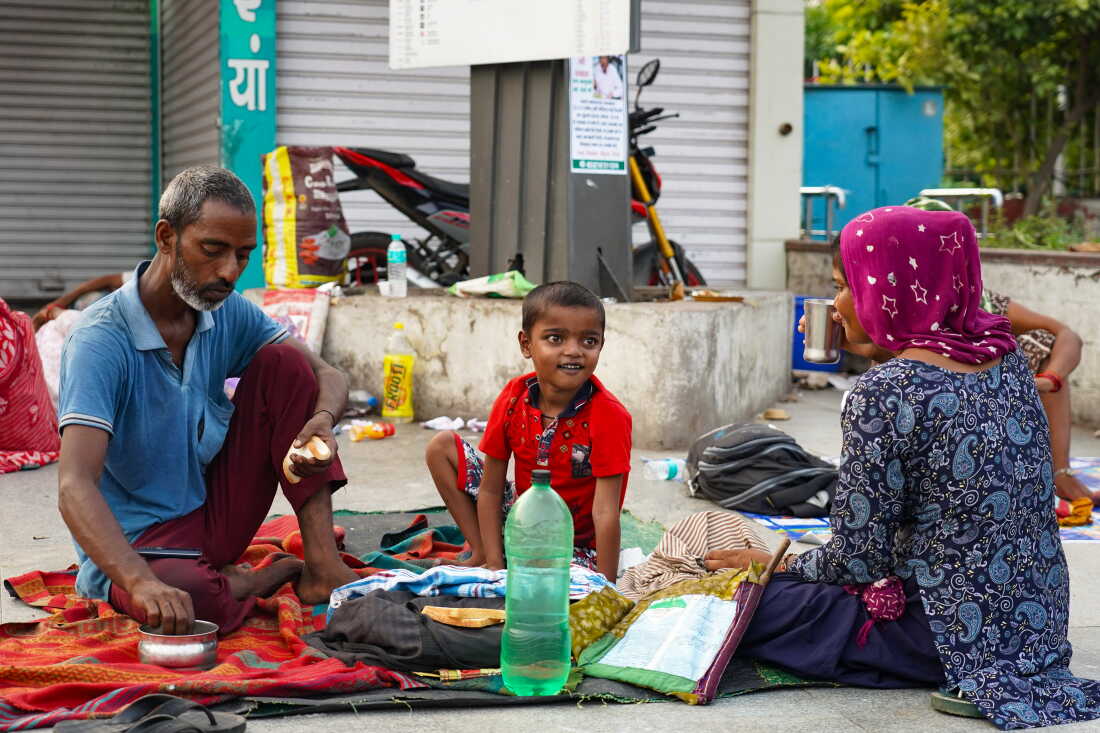
Heat also reduced people’s capacity to work productively in 2025, costing the global economy an estimated US$1.07 trillion in potential income (0.91% of global economic output), the third consecutive year that losses topped US$1 trillion. South-East Asia and Africa were hit hardest, with losses equivalent to 3.9% and 3.2% of GDP, respectively, compared to 0.2% in Europe and 1.5% in the Americas. The agriculture and construction sectors, both largely outdoor and physically demanding jobs, absorbed the biggest share of the losses (38% and 29% respectively), because heat directly impacts people’s labour productivity, and puts workers’ health at risk. The impact is particularly pronounced in Africa, where agriculture accounts for 71% of heat-related potential income losses.
More than half the world’s land (51.8%) was hit by extreme drought for at least a month in 2025, the second-worst year on record after 2023. Since 2016, the area affected by drought has grown more than 700% faster than it did in 2006–2015. In addition, a new satellite analysis identifies growing extremes in water storage. Since 2003, 43% of the world’s land has seen a long-term drop in water storage (getting drier) while a separate 37% has seen a long-term rise (getting wetter), together creating hydrological extremes affecting more than 80% of the world’s land and threatening crops, food supplies, and sanitation. Very extreme rainfall is also becoming more common, reaching almost 17.2% of global land each year in 2016–2025, up from 14.8% the previous decade, and increasing the risk of floods, landslides and waterborne disease.
“These numbers point to a clear emergency,” says Professor Romanello. “The rate of increase in many climate-related health threats is accelerating, while heat deaths linked to climate change have reached a record-high, and the economic toll is battering vulnerable sectors and communities the hardest. The risks become even more profound when you consider how different hazards interact and compound. At the same time, drought is spreading, and the world is swinging to water extremes, some drying out, while others are flooding. This isn’t a gradual worsening; it’s a step change that must be recognised as the global health emergency it is”
Despite gains, progress is falling short
Cleaner energy, more resilient health systems, along with more health-protecting legislation and growing scientific evidence have brought real health benefits to local communities since the 2016 Paris Agreement, but these gains are still too slow, too insufficient, and too inconsistent to offset the growing risks.
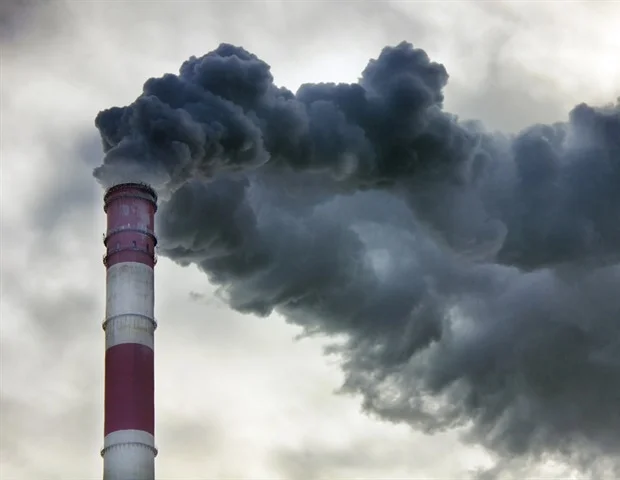
Global investment in clean energy grew 7.2% in 2025, to a record US$2.1 trillion, 82% more than the US$1.16 trillion invested in fossil fuels. Such investment has helped renewable electricity grow from 5.5% of the total generation in 2016 to 13.5% in 2023. Health gains are already evident, with cleaner air preventing an estimated 323,000 deaths a year in at least 77 countries where air pollution from fossil fuels has fallen since 2016. However, rising overall energy demand and slow system change means fossil fuels still supply over 80% of the world’s energy, and climate-heating emissions reached a record high in 2024. Despite gains in some countries, fossil-fuel air pollution still kills an estimated 2.73 million people a year worldwide.
Health systems are taking important early action: a quarter (56 of 194) of WHO member states now have a national plan for adapting health services to climate change, up from just 14 in 2015, and 47 have separately completed a vulnerability assessment to underpin plans. Beyond planning, almost half of WHO member states declared already having a health surveillance system that incorporates climate information, and more than half (75 of 145 respondents) declared having at least one climate-informed health early warning system. Importantly, the report finds that health early warning systems are slowing down the increase in deaths from extreme weather events in those places which have them.
Legal momentum is building as well. National laws referencing both climate change and health have risen roughly 50-fold since 2000, most of that since 2016. Funding for climate-related health research has also increased, up 655% between 2016 and 2024 from US$42 million to US$316 million, though almost all of it (84%) still goes to researchers in the world’s wealthiest countries, leaving evidence gaps where the risks are often greatest.
“Ten years ago, we proposed that responding to climate change could offer the greatest health opportunity of the 21st century through adaptation efforts and rapid progress in phasing down fossil fuels and other emission sources”, says Prof Anthony Costello, Co-Chair of the Lancet Countdown. “A decade on, we have proof that health-centred climate action works: cleaner air, more resilient healthcare and warning systems are protecting health and saving lives globally. But the pace and scale of emissions reduction remains entirely out of step with the pace and scale of the harm.”
Fossil fuel expansion and funding gaps raise the risk
The report finds that progress on the transition away from fossil fuels is continuing to fall short. Fossil fuel production plans are increasingly misaligned with the Paris Agreement’s 1.5°C goal, with the world’s 100 largest oil and gas companies now planning to produce 150% more fossil fuels by 2040 than is compatible with keeping warming to 1.5°C, up from 138% in 2025 [see page 261 in the appendix].
Production plans persist despite rising fossil fuel costs, which are straining public finances. In response to energy price spikes, global net fossil fuel subsidies reached record levels in 2022–2024, and ten countries spent more on them in 2024 than on their health systems. Net subsidies have doubled since 2016, with countries allocating a cumulative US$6.20 trillion to them since the Paris Agreement was introduced.
Despite the critical need to move away from fossil fuels to protect health and lives, vested interests continue to obstruct progress. The report details how lobbying and disinformation by fossil fuel interests and their political allies continue to weaken support for climate action, despite growing scientific evidence linking climate change and health. The report also finds that national governments, international organizations, and the private sector are now less engaged with health and climate change, reversing previous progress.
Adaptation funding is falling far short of what’s needed: the health adaptation needs quantified so far by developing countries (as classified by UNFCCC) put the minimum cost at US$3.3 billion a year, based on data from only 48 of the 79 countries that have completed these estimates. Yet only around a third of this declared need, US$1.1 billion, was committed in 2024. This substantial financing gap is reflected in countries’ ability to translate adaptation priorities into action, with finance and human resourcing identified as the top barriers to implementation of Health National Adaptation Plans. Shrinking foreign aid budgets, including cuts to Overseas Development Assistance, risk widening this gap and placing the heaviest burden on the most vulnerable countries.
A call to declare a global health emergency
A decade after the Paris Agreement, the report’s authors are calling for climate change to be formally declared a global health emergency, for a new WHO instrument to enable a coordinated global response, and for governments to put health at the centre of every climate decision, from emissions targets to climate funding. Priorities include urgent, fair cuts to greenhouse gas emissions, sustained investment in science, and climate finance for health delivered as grants rather than loans, so that countries can adapt without taking on more debt [see detail on the six priority recommendations in Panel 1].
“This report is a stark warning that climate change is a health emergency. What’s missing is not evidence, but the political will to act on it,” said Helen Clark, former Prime Minister of New Zealand and Chair of the Board of the Lancet Countdown. “Governments must double down on their climate action commitments and rebuild momentum for international co-operation. This must go hand in hand with rapid emissions reductions and significantly greater support for adaptation, particularly for the communities least responsible for climate change and most vulnerable to its impacts.”
Source:
Journal reference:
Romanello, M., et al. (2026). The 2026 report of the Lancet countdown on health and climate change: A decade of escalating health harms and a decisive moment for all. The Lancet. DOI: 10.1016/S0140-6736(26)01779-4. https://www.thelancet.com/journals/lancet/article/PIIS0140-6736(26)01779-4/abstract