- India’s deep-sea fishing scheme has few takers as high costs, unsuitable boat designs and delayed subsidies deter participation.
- The government approved 392 deep-sea fishing vessels under the scheme’s 2020–25 implementation period. But so far, fewer than half of the approved boats have actually been ordered.
- Despite these challenges, India is expanding its deep-sea and high-seas fishing ambitions, with new policies and programmes focused on tuna and other high-value species.
- Through field reporting, RTI replies and Lok Sabha reports, Mongabay-India reviewed the status of the five-year scheme and found gaps between policy and reality.
This story is the first in a series on deep-sea fishing in India, produced in partnership with the Pulitzer Center’s Ocean Reporting Network. The first story examines India’s Deep Sea Fishing Vessel Scheme and finds a mismatch between its ambitions and the realities of fishing.
Shaju Antony, a traditional fisherman from Kerala, was encouraged by his parish priest to apply for a government scheme in 2020 that provided financial assistance for deep-sea fishing vessels. He gathered about ₹7.2 million for his part of the contribution for a boat under the Pradhan Mantri Matsya Sampada Yojana (PMMSY), a central government scheme. He received the boat three years later, in December 2023. But the boat started showing signs of trouble as soon as he started using it. Antony and his crew spent another ₹3 million repairing the boat. Finally, after months of sending petitions to the state government to look into the matter, he gave up. “If they are building boats for fishermen, why aren’t they consulting the fishermen?” he asks.
About 1500 km further up, on the west coast of India, Kiran Koli, a traditional fisherman and leader of a fishers’ union from Maharashtra, had also applied for the same government scheme in 2017-18 when it was under the government’s Neel Kranti (Blue Revolution) Mission. In 2020, when the scheme became Pradhan Mantri Matsya Sampada Yojana, Koli was the first person on the list, he says. In June 2026, nearly a decade after he first applied, Koli received his boat. But the final two instalments of the subsidy from the government, which cover a percentage of the boat’s cost, are yet to arrive. “We were supposed to prosper with this new boat, but are instead caught in a deeper mess, a never-ending wait,” he told Mongabay-India. “Imagine, someone like me, a union leader, is stuck in this mess. How will a regular traditional fisherman survive this?” he asks, underscoring the concerns that make other fishers wary of participating in the scheme.
Fisheries is an important economic sector for India, contributing 1.1% to the national GDP and 7.26% to agricultural GVA (Gross Value Added). It serves nearly 28 million livelihoods in the country and contributes to nearly 8% of the global output. Coastal fishing, however, faces the challenges of overfishing, coastal erosion and development pressures. This has prompted the government to look to deeper waters to expand the sector.
With a coastline of over 11,000 kilometers, India has been pursuing deep-sea fishing, driven by the promise of high-value catch for exports, better livelihood opportunities for traditional fishers, and securing greater access to waters beyond its national jurisdiction.
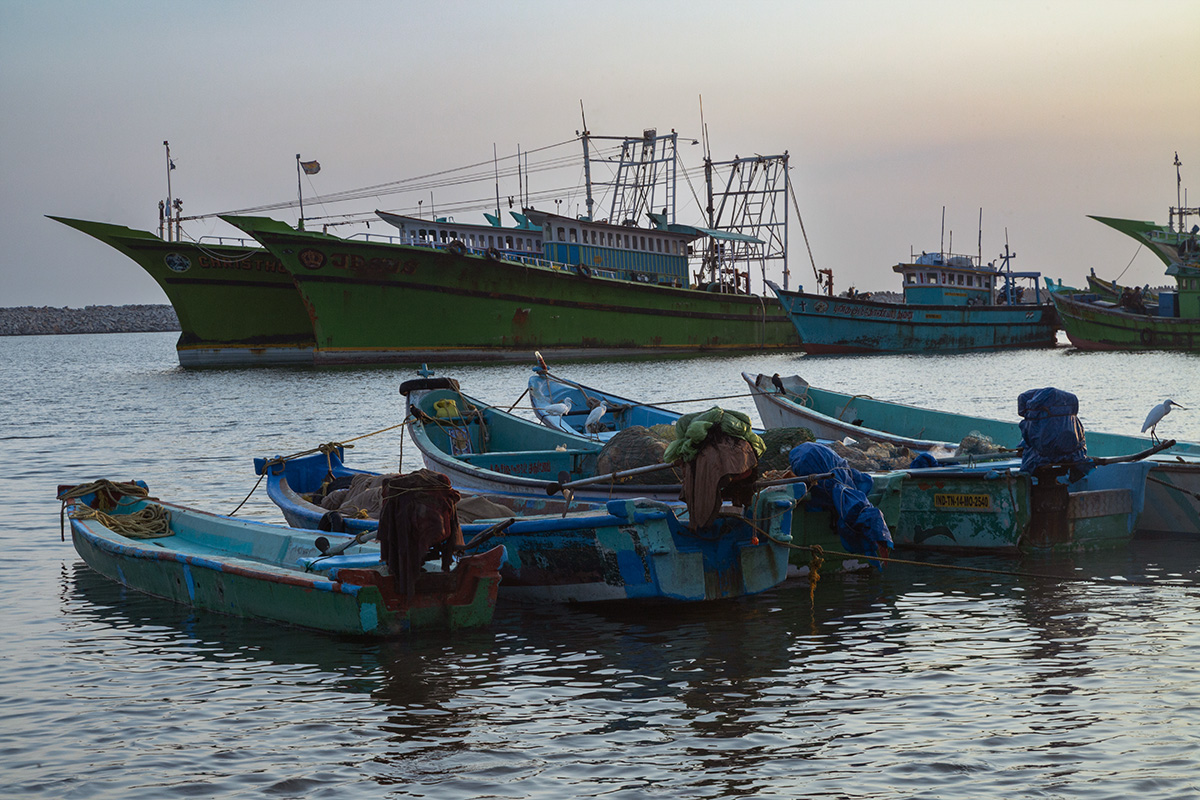
As part of the broader push towards deep sea fishing, in 2020 the government launched the Pradhan Mantri Matsya Sampada Yojana, a national fisheries scheme, under which the largest allocation of funds is to support traditional fishers to acquire deep-sea fishing vessels. With these vessels, the fishers can conduct fishing activity at sea depths greater than 200 metres. This gives fishers access to higher-value species such as oceanic tuna, billfish, sharks and oceanic squid that are less available in nearshore waters.
However, a deeper look at the actual implementation of the scheme exposes a disconnect between the policy on paper and the on-ground needs and realities of the country’s fishers.

Fishers hesitant
Traditional fishers in India are defined by their reliance on ancestral knowledge of the sea, and skills passed down through generations, alongside a deep understanding of local marine ecosystems.
The central government’s PMMSY scheme aimed to convert traditional fishers into deep-sea fishers, but it has found few takers so far.
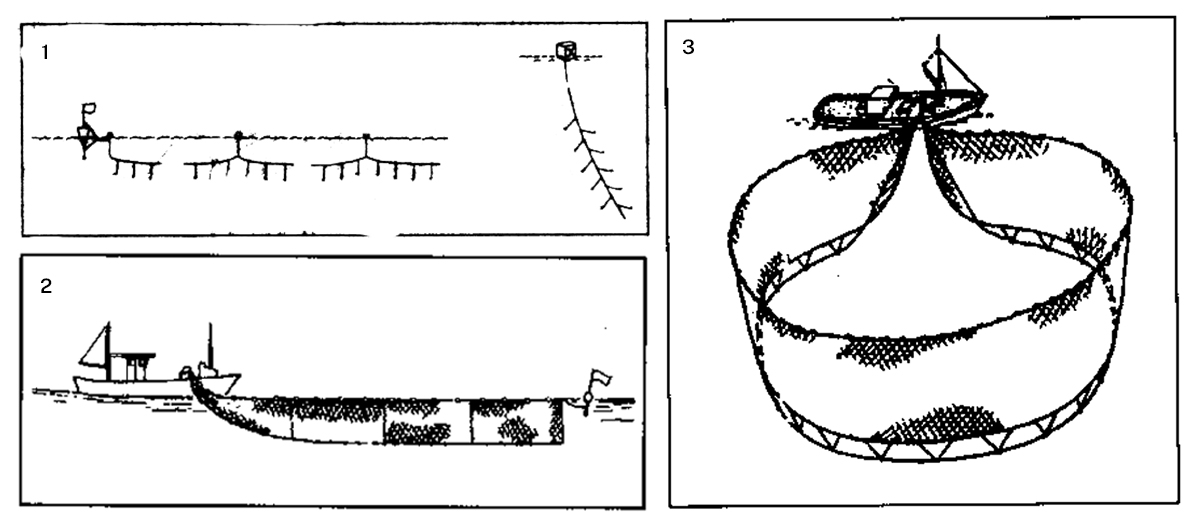
Under the scheme, a deep-sea fishing vessel, mainly a tuna longliner-and-gillnetter, worth a minimum of ₹1.2 crore (₹12 million) is offered to the beneficiary fisher at a subsidised cost, with the government and beneficiary sharing the costs. The share of investment in these boats is typically 60% from the fishers and 40% from the government, with higher subsidies for women and certain disadvantaged groups, though it varies state to state. The boat costs do not include costs of the fishing gear, which the boat owners have to buy themselves.

The government had approved around ₹470 crore (₹4.7 billion) for the construction of 392 deep-sea fishing vessels under the scheme’s 2020–25 implementation period. But as of September 2026, only 131, less than half of the approved number of boats, have been ordered (constructed and under construction), according to a compilation of responses received from RTI applications and officials from each state.
Many of the fishers who invested their trust and money early on in the scheme are in debt. Delayed subsidy payments, high operational costs arising from defects and poor boat design have left them with more money lost than gained. They also do not have a robust supply chain or a market for their catch. The difficulties faced by the initial beneficiaries have made others more cautious about taking up the scheme.
The scheme intended to improve income and livelihoods has, in turn, left many fishers questioning its financial viability.
Increasing catch, expanding presence
India’s policy on marine fisheries has been motivated by its ambitions to increase fish catch for domestic markets and exports, and securing its presence in the EEZ [exclusive economic zone] waters and ABNJ [areas beyond national jurisdiction].
Its deep-sea fishing ambitions have historically responded to the demands of the global market. The initial demand for penaeid prawn led India to move toward mechanisation of its fishing fleets and increasing its capacity for fish catch and for surveys. This was followed by a demand for exploration of tuna and tuna-like species. India then followed the development template of several other countries pursuing deep-sea fishing. It began importing foreign vessels, forming foreign country collaborations, joint ventures, investments, technology transfers and training for gear-species diversification.
India faced resistance against foreign investment and foreign vessels in the Indian waters by the country’s traditional and small-scale fishers. This led to a shift in policy where the focus then became on building and promoting indigenous deep-sea fishing vessels.
Boats on the ground
Most of the 131 boat orders from the 392 approved are from Karnataka where 58 boats have been sanctioned and Maharashtra with 49. Some of the largest fish-producing states like Andhra Pradesh and Kerala have only 6 boats operational and there have been no takers from other major fishing states like Odisha, Gujarat, Goa, Tamil Nadu and others.
This variation also reflects how the scheme has been taken up across different states as well as the fishers’ ability and willingness to take on the financial costs involved.
Kerala was, in fact, the first state to implement the deep-sea fishing vessel scheme under PMMSY that was launched in 2020.
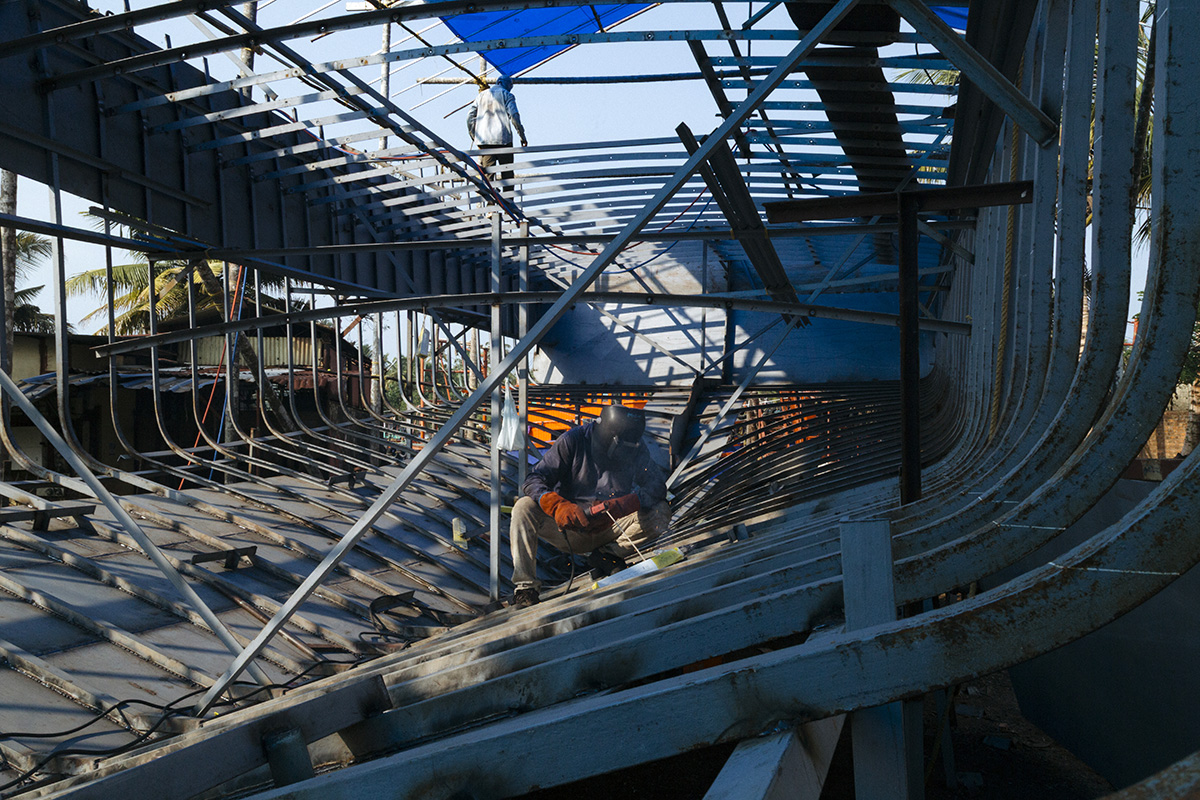
Their vessels were constructed by Cochin Shipyard Ltd, India’s largest shipbuilding and maintenance facility. The vessels were 22.7m long tuna-longliners-cum-gillnetters made entirely of steel, with a 230 HP engine by Indian company Greaves Cotton Ltd, with a wheelhouse and accommodation facilities. All components of the boat were of Indian make, following the protocol of Make In India, a government initiative to encourage domestic manufacturing.
All the beneficiaries of the Kerala vessels had consistent complaints — they returned to the shore with rotting fish because the cooling compressor did not work, the engine stalled mid-operation at sea, it guzzled too much fuel, the rudder did not function properly, there was seepage of water in the engine room. None of the beneficiaries are currently earning a profit on these boats and have debt rising to over ₹4 crore (₹40 million) collectively.

Seeing the experience of Kerala fishers, the fishers and boatyard builders in Karnataka and Maharashtra lobbied for a different design. In August 2025, during a consultation with stakeholders, the central ministry of fisheries sent a modified/amended standard operating procedure (SOP) for procurement of deep-sea fishing vessels. While the new SOP would help the next set of boats, the Kerala fishers continue to suffer.
In Maharashtra and Karnataka, two important fishing states on India’s west coast, the overall number of boats on the ground is higher than in other states, but the expenditure is still significantly less than the approved funds. Officials of the respective states said that the fishers are hesitant to apply for the scheme because of high upfront investment and they are not confident of receiving the subsidy amount from the government in time. Work on building the boats starts once the fishers put in the first installment of their share of funds, after which the government puts in their installment. The remaining installments come through at different stages as the work on the boat construction progresses.
“For a traditional fisherman, this is a huge investment to make,” said Kiran Koli, the fisher union leader from Maharashtra. “They would be willing to take this risk if the returns are assured,” he said.
In Karnataka, the central government approved funds for 114 boats. Only 58 boat orders have been placed so far, of which only 31 boats are completely constructed. A state official from Karnataka said they had a hard time convincing fishers to take up the scheme as the fishers had doubts about it.
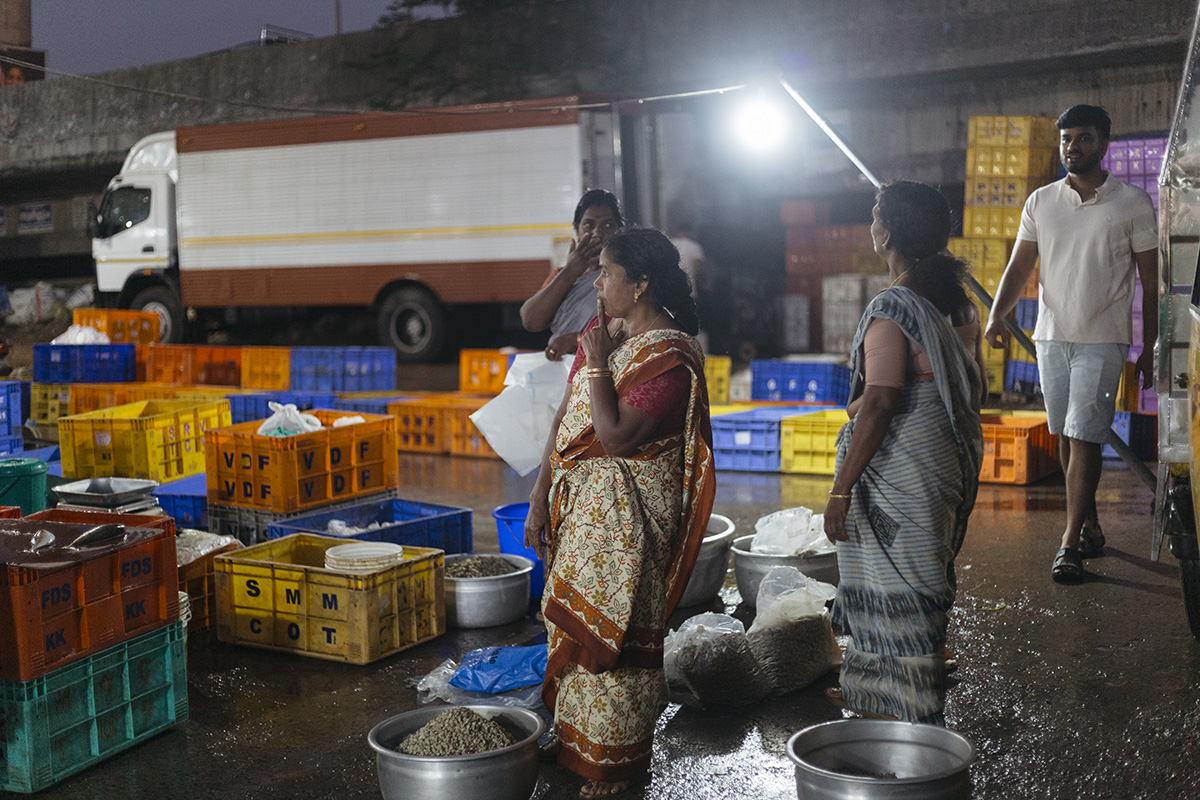
In Andhra Pradesh, a state on the east coast with rich fishing grounds for yellowfin tuna, the central government had approved funds for 50 deep-sea fishing vessels between 2020 and 2025. But so far, only six deep-sea fishing vessels are in operation, in the districts of Nellore, Kakinada and Tirupati. State government officials say that fishers are not willing to come forward to avail themselves of the scheme because the vessels are too expensive and it is difficult to get loans. They added that for the deep-sea catch, there are no adequate processing or export facilities available in the existing fish landing centres and harbours. Cold storage facilities are not enough. Those who have the boats are not happy because they are not finding a good market to sell the catch at good prices.
In the Andaman & Nicobar Islands, there have been orders for three deep-sea fishing vessels that are still under construction. While in Lakshadweep, nine deep-sea fishing vessels are currently under construction.
The islands were in fact part of the 2025-26 Union Budget announcement, where India’s finance minister emphasised a special focus on harnessing their marine fisheries potential, particularly for tuna fisheries and developing a tuna cluster in the Andamans. Officials in the Andaman & Nicobar Islands have clarified that so far no money has been spent on building tuna-related infrastructure.

No takers in some states
Meanwhile, in several major fishing states, including Tamil Nadu, Gujarat, Goa and Odisha, there were no takers for PMMSY’s deep-sea fishing vessel scheme during its 2020–25 implementation period. Fishers in these states raised concerns over the investment required, the prescribed boat design and fishing gear. In some cases, they were also wary after earlier deep-sea fishing schemes had failed to take off.
Tamil Nadu, located on the south-eastern coast of the Indian peninsula, was, in fact, one of the early implementers of the government’s efforts towards deep-sea fishing. Under a previous scheme called Blue Revolution, the central government sanctioned 281.5 crore to the Tamil Nadu government, between 2017 and 2020, to convert 750 trawlers to longlining vessels for the fishers in the state’s Palk Bay region. But though the state government received an approval for 750 boats, state officials say they got only about 91 boat orders under the Blue Revolution scheme.
When the PMMSY’s deep-sea fishing vessel scheme came about in 2020, no fisher in Tamil Nadu opted for it, citing high operational and construction costs, Tamil Nadu fisheries officials explained. “They say that they get insufficient landing catch as compared to the operational costs, so they do not want to go for this. They also don’t have skilled labour for longlining,” explained a state fisheries official, requesting anonymity as he was not authorised to speak to the media. The officials plan to introduce interest-free loans, aside from the existing subsidy, with the hope of attracting fishers to the scheme.
In Gujarat, a state on India’s west coast that boasts of the longest coastline of over 2400 km, and consistently tops the country with its marine-catch landings, the central government had approved a budget for 50 deep-sea fishing vessels under the 2020-2025 PMMSY scheme. But conversations with the state fisheries officials and the empanelled boatyards confirmed that no fisher in Gujarat has come forward to invest in the scheme. Damodar Chamudiya, president of Mahavir Fisheries Cooperative Society, one of the largest fisheries cooperative societies in the state, with over 6,000 members, told Mongabay-India that the reason none of their members applied for the scheme so far is because the government was not offering a refund on the diesel tax. “Our boats consume over 60,000 litres of diesel every year. Our fishermen cannot earn good money if there are no tax rebates on fuel,” Chamudiya said. With rebates on fuel, the per-unit cost of fishing reduces, allowing for the boats to have incentives to venture deeper. On June 29, 2026, the Gujarat government approved a revision to its Diesel VAT Subsidy Scheme, now also allowing vessels over 20 metres in length, which includes deep-sea fishing vessels, to take up the subsidy on VAT on high-speed diesel used in mechanised fishing boats. Chamudiya said that thirty members of his cooperative will now apply for the scheme.
In Goa, the state officials say that a majority of the fishers in Goa conduct purse seining, and they were not keen to take up longliners-cum-gillnetters. Many fishers in Maharashtra cited similar reasons for not taking the scheme.
The scheme itself, however, does not seem to be the problem; its design and implementation is, say the fishers. Shaju Antony, who is deep in debt because of the scheme, still believes that the intention behind it is good. “When we got this boat, we imagined that our people could go into the deep sea, catch fish, and bring them back. This will be an asset to our society, specifically our cooperative society. We started with that intention,” he told Mongabay-India. “Now we are in trouble because of the manufacturing of this boat.”
Lack of shore-based infrastructure
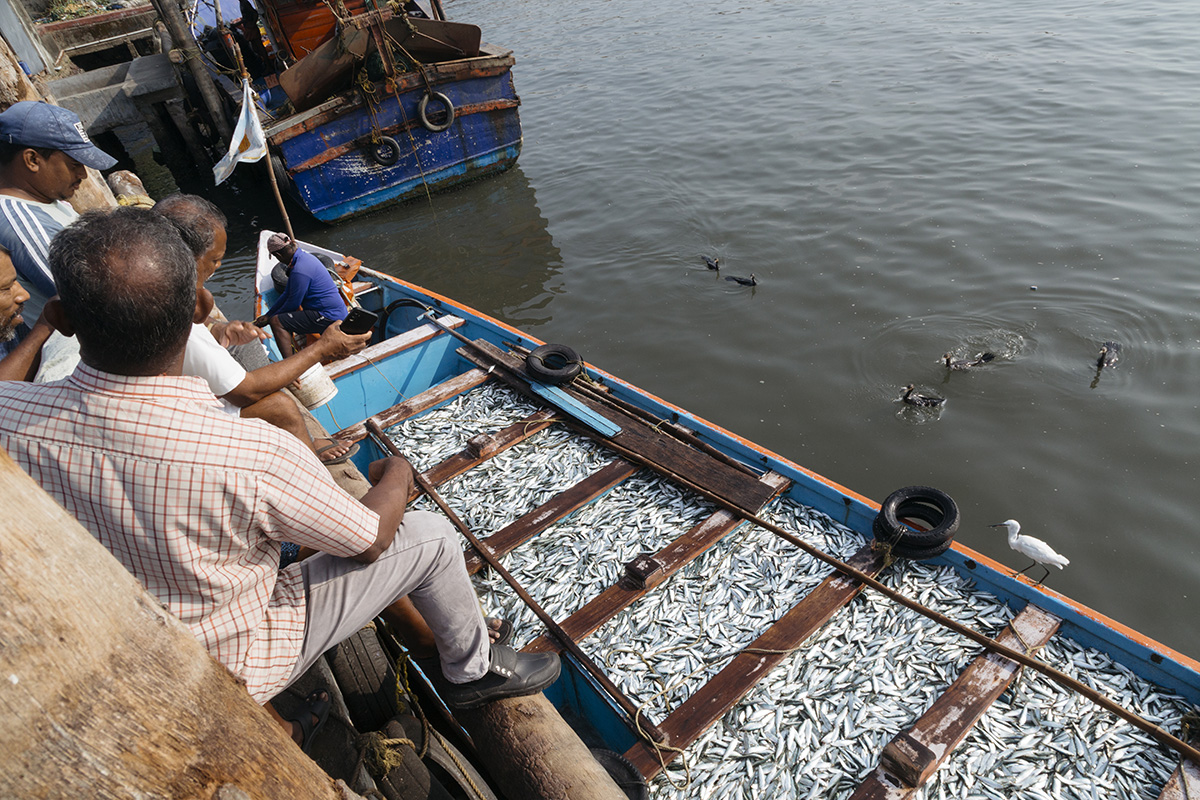
While poor boat design, high price and delayed subsidies have left the fishers, who participated in the scheme, disappointed, the absence of processing facilities and an assured market place for deep-sea catch, deter the fishers further.
“We need a tuna-specific infrastructure either on board the fishing vessels or at least at the harbours. Without it, one cannot sell the fish at good margins,” said an official from the state fisheries department of Andhra Pradesh, adding that due to a lack of strong market linkages and processing units the fishers are reluctant to take on the scheme.
NITI Aayog, India’s apex public policy think tank, states in it’s own strategy document on India’s deep-sea fishing potential, that the lack of adequate infrastructure and access to advanced technologies is one of the most significant challenges hindering the growth of India’s deep-sea and offshore fishing industry.
Deep sea push continues
On the global stage, India’s stance is that large, historically subsidised distant-water fishing nations bear primary responsibility for the depleting tuna stocks, not developing coastal states such as India, whose fishing sector, as India portrays, is predominantly small-scale and comparatively low-impact, a claim that is internally contested by the country’s small-scale fisher unions. This is reflected in two ongoing negotiations that India is a part of: the WTO fishery subsidies agreement, which India recently signed, and the IOTC talks on criteria for tuna-catch allocation. The WTO agreement includes binding rules to curb harmful subsidies linked to overfishing, overcapacity, and illegal, unreported, and unregulated (IUU) fishing. The IOTC, the regulatory body overseeing tuna fishing in the Indian Ocean, recommended total allowable catch and quotas for tuna species for the 2027-2028 period
India has paired its international advocacy with domestic frameworks that operationalise the same “protect small-scale EEZ fishers, regulate high-seas activity responsibly” logic. It introduced the Pradhan Mantri Matsya Sampada Yojana (PMMSY), of which the deep-sea fishing vessel scheme is a part. And in November and December 2025, with a view to regulate India’s fishing activity in the EEZ and the ABNJ regions, and driven by the imperatives of WTO and IOTC negotiations, the Ministry of External Affairs introduced fishing rules and guidelines. Then, in July 2026, the government of India launched a programme to issue letters of authorisation for Indian-flagged fishing vessels to undertake regulated fishing operations in the high seas.
Mongabay-India sent a list of questions to the Department of Fisheries, Government of India about our investigation seeking comments. The ministry has not responded yet.
As India expands its ambitions for deep-sea fishing, the experience of fishers under the PMMSY scheme so far offers an indication of what will need to be addressed before those ambitions can sail.
This story was produced in partnership with the Pulitzer Center’s Ocean Reporting Network.
Banner image: Yellowfin tuna auction at Vypin fishing harbour. Inadequate processing facilities mean Indian fishers receive lower prices for their tuna compared to international market standards. Image by Leo Paapam/Mongabay.