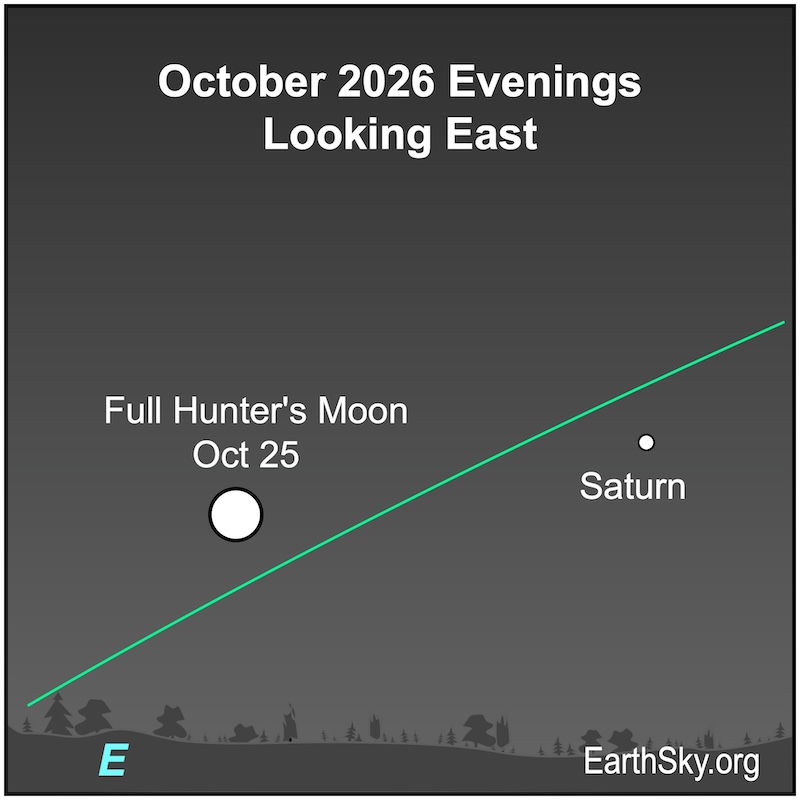
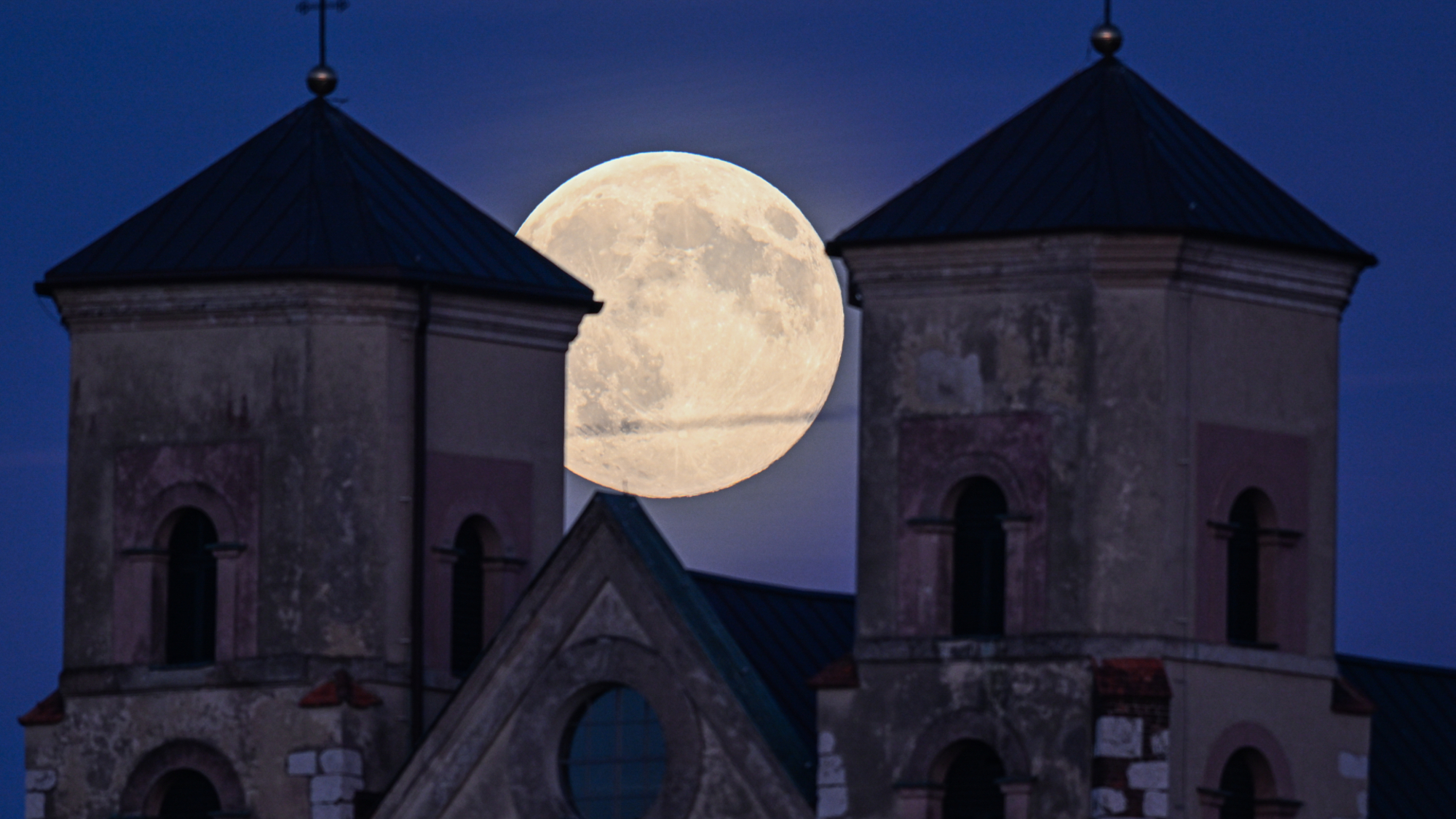
The November full moon reaches maximum illumination at 9:53 a.m. EST (1453 GMT) on Nov. 24, as the lunar disk sits opposite the sun in Earth’s sky, appearing fully lit by its rays.
November’s full moon is traditionally known as the “Beaver Moon“, because it rises around the time when the small mammals take refuge in their dens, having stored enough food to survive the long winter months, according to the Old Farmer’s Almanac.
The Nov. 24 full moon also happens to be the first of three consecutive “supermoons“. The non-scientific term is often bestowed on full moons that occur when the natural satellite is within 90% of perigee, when the moon is closest to Earth in its elliptical orbit. The proximity can make a supermoon appear 14% larger and 30% brighter than the smallest full moon of the year, according to NASA.
When to see the November full moon
The November full moon will be below the horizon for stargazers in the U.S. when it turns full at 9:53 a.m. EST on Nov. 24. Instead, viewers in America will get their best view of the near-full Beaver Moon as it arcs towards the western horizon in the predawn hours of Nov. 23.
You may notice the lunar disk take on a gorgeous yellow-orange hue in the hour before moonset, as the bluer wavelengths of its light are scattered by Earth’s dense atmosphere through a process known as Rayleigh scattering — the same phenomenon that turns the sky red at sunset.
November’s supermoon may appear even larger as it travels close to the horizon thanks to a phenomenon known as the “Moon Illusion“, which tricks us into thinking that the lunar disk is larger than it actually is while closer to foreground objects, compared to when it shines overhead. The moon will also appear fully lit to the casual observer on the evenings of Nov. 23 and Nov. 24, so there’s no need to miss out if you struggle with early mornings!
The table below details local full moon timings for when the moon is 100% illuminated for a selection of cities spread across the globe (local moonset and moonrise times will vary based on your location):
Local full moon timings for November 2026
|
City |
Local time |
|---|---|
|
New York |
9:53 a.m. EST on Nov. 24 |
|
London |
2:53 p.m. GMT on Nov. 24 |
|
Beijing |
10:53 p.m. CST on Nov. 24 |
|
Tokyo |
11:53 p.m. JST on Nov. 24 |
|
Sydney |
1:53 a.m. AEDT on Nov. 25 |
Why it’s called the Beaver Moon
The November full moon is often called the Beaver Moon because it rises around the time that beavers retreat to their lodges after collecting enough food to see them through the winter.
Celestron Nexstar 4SE

This is a fantastic go-to telescope with a 4-inch aperture that can help you quickly find a steady view of the moon. For a closer look at craters and the terminator, make sure to grab a 9mm or 12mm eyepiece and get stronger magnification.
It is also known as the Frost Moon by the indigenous Cree people of Canada and the northwestern U.S., and as the Digging Moon by the Tlingit, in reference to the animals that scratch around for fallen nuts in the hardening autumn earth, per the Old Farmer’s Almanac.
The rising of the November full moon also marks the Hindu festival of Dev Diwali when worshippers light earthen lamps called “diyas” and offer prayers to celebrate Lord Shiva’s defeat of the demon Tripurasura, after which the Hindu gods descended to Earth to celebrate, according to the Edinburgh Hindu Mandir & Cultural Centre.
Nov. 24 and the rising of the full moon also coincides with the Sikh celebration of Guru Nanak Gurpurab, when millions celebrate the birthday of Guru Nanak, the founder of Sikhism, according to the BBC.
What else to see in the sky around the full moon
Stargazers in the U.S. will be treated to a magnificent natural light show in the predawn hours of Nov. 24, when the near-full moon shines low on the western horizon less than 5 degrees from the bright stars of the Pleiades open star cluster.
The Pleiades and moon will be close enough to share the field of view of a pair of 10X50 binoculars, which will help reveal gorgeous detail on the lunar surface, while helping to resolve dozens more of the clusters blue-white stars as they cut through the deluge of moonlight.
Tear your gaze away from the moon and find a trio of spectacular multi-colored lights forming a tight triangle high in the southern sky. The red light of Mars will shine steadily above the twinkling star Regulus at the heart of the constellation Leo, with the yellow-white light of Jupiter to their right.
Venus will also be visible as a dazzling “Morning Star” hanging low on the eastern horizon, with Mercury below, tracing out the path of the approaching sun.
Saturn, meanwhile, will make for a satisfyingly easy and visually spectacular target in the post sunset hours of Nov. 24, as it shines in the southeastern sky in the constellation Pisces, whose stars will be a challenge to spot in the light of the newly waning moon.
Observing tips
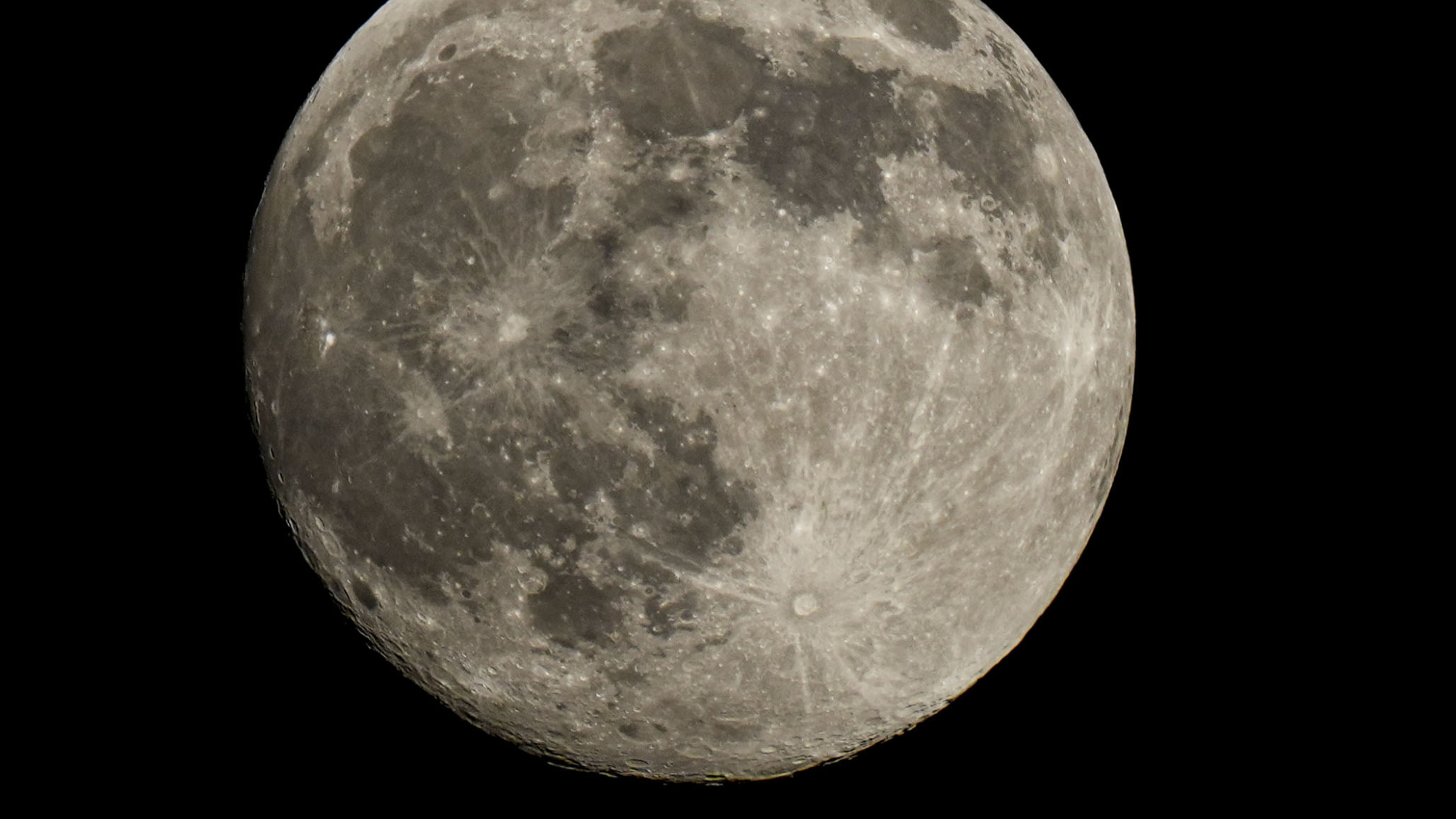
The November full moon presents a stunning opportunity to photograph the entirety of the Earth-facing lunar disk as its disk appears temporarily free from shadow. Be sure to make use of our expert guide to photographing the moon, along with our picks of the best cameras and lenses for astrophotography, if you want to upgrade your equipment.
- Use a tripod to keep your camera as steady as possible.
- Use a remote shutter/timer to prevent camera wobble.
- A smartphone stargazing app can help you find the exact point of moonrise on your local horizon.
- A lens with a focal length of 12-50 mm is useful for landscape photography, while a focal length of at least 400 mm is advised for capturing more detailed views of the lunar surface.
- The moon can be made to appear particularly large while close to the horizon next to foreground objects, where it may take on an orange-yellow appearance thanks to Rayleigh scattering. A cleaner, more “classic” view can be captured as it soars high overhead.
Upcoming full moons
|
Month |
Full moon name |
Date and time |
|---|---|---|
|
December |
Cold Moon |
8:28 p.m. EST on Dec. 23 (0128 GMT on Dec. 24) |
|
January |
Wolf Moon |
7:17 a.m. EST (1217 GMT) on Jan. 22, 2027 |
|
February |
Snow Moon |
5:09 a.m. EST (1009 GMT) on Feb. 20, 2027 |
These times mark the exact instant of full illumination. Your own moonrise or moonset may be hours earlier or later, depending on your location. For the best viewing plan, use an app such as Stellarium or SkySafari 7 Pro to find your local moonrise time and be sure to read our full moon calendar for comprehensive timings for each full moon in 2026.
Editor’s Note: If you would like to share your full moon photos with Space.com’s readers, then please send your photo(s) along with your name, the location and any comments on what it was like to capture the picture to spacephotos@space.com.