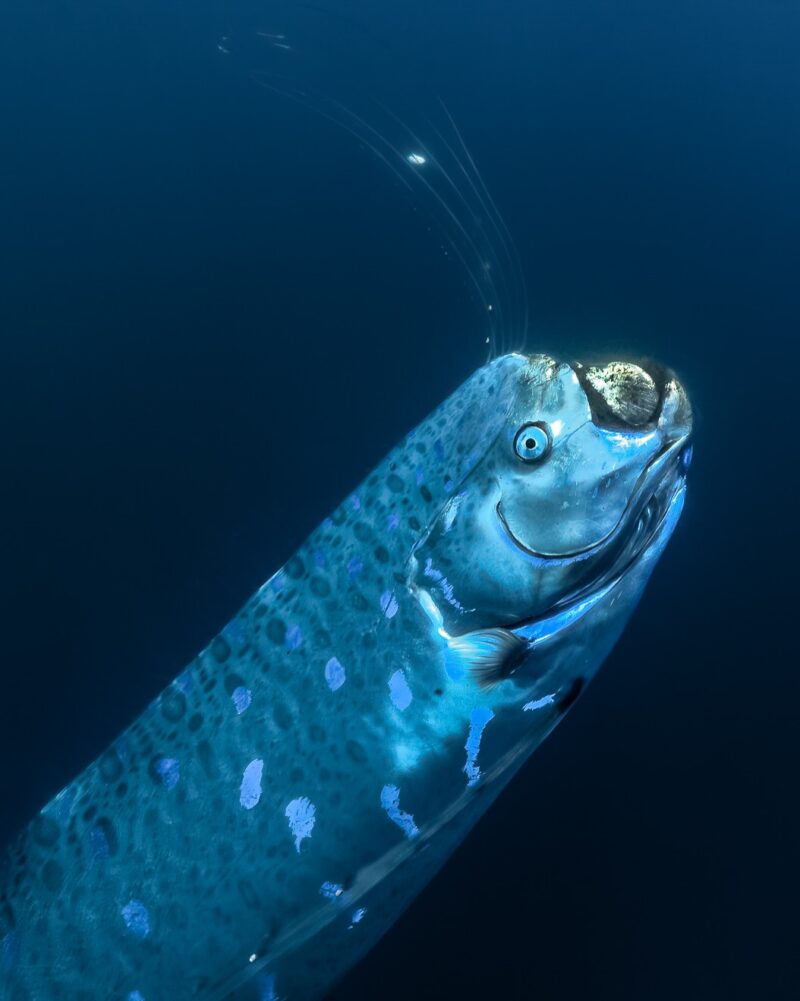
- As part of a captive-breeding and release programme, 350 lab-bred snow trout fingerlings were released into Naini lake, Nainital, Uttarakhand, in April 2026. The species was considered locally extinct for thirty years. However, a significant number of the introduced fingerlings have died.
- While the exact cause has not been determined, experts point to Naini lake’s reduced oxygen levels and rising temperatures, driven by decades of pollution and accelerating climate change, as likely factors. Snow trout require water temperatures between 8°C and 22°C, while this summer, recorded temperatures rose up to 27°C.
- Experts suggest that the lake environment must be restored before reintroducing snow trout to achieve conservation success.
On April 27, 2026, scientists from Kumaun University’s Department of Zoology released the first batch of snow trout fingerlings into a cage in Naini lake, Nainital, Uttarakhand. The fingerlings were part of a captive-breeding programme to revive the snow trout (Schizothorax richardsonii). Locally called Asela, the native cold-water Himalayan fish has been listed as Vulnerable on the IUCN Red List since 2010. Considered locally extinct for thirty years, its populations have declined steeply in other lakes of the region.
Using Biofloc and recirculating aquaculture system (RAS) technology, scientists lab-bred the fish over two phases before releasing roughly 350 fingerlings into a cage in Naini lake. In June, the initiative expanded to the three other lakes, Bhimtal, Sattal and Naukuchiatal, with smaller cages.
However, more than half of the fingerlings died in Naini lake, with similar reports from Bhimtal and other lakes, report the programme staff. The causes remain unknown, but the high mortality raises a larger question: can a reintroduction programme sustain fish in the very lakes that pushed them towards extinction through pollution, habitat destruction and climate change impacts?

A lake on life support
Snow trout once thrived across Kumaon lakes through the 1980s before their populations collapsed due to sewage pollution, dropping oxygen levels and increased competition with exotic species such as the common carp.
According to the Directorate of Coldwater Fisheries Research (DCFR), snow trout is found across the Himalayan belt, from Jammu and Kashmir to Assam and Sikkim. In Uttarakhand, it is specifically found in Dehradun, Tehri, Pauri, Uttarkashi, Champawat, Nainital, and Almora. It needs cold, pristine, well-oxygenated water to survive, conditions which are depleting in Naini lake.
Vishal Singh, Executive Director of the Centre for Ecology, Development and Research (CEDAR), who has worked in Himalayan ecosystems for more than two decades, says, “Naini lake is effectively on a ventilator.” Since 2007, the lake has relied on 30 aerator pipes because oxygen levels dropped to critically low levels, leading to several fish mortalities.
“Naini lake now behaves more like an aquarium than a living water body. As climate change hits the Himalayan region, no one can say with certainty what its water balance will look like in future,” he says.
The infrastructure keeping the lake breathing is, however, failing. Harpinder Veer Singh Randhawa, Director of Global Aqua Treatment Technology in Pantnagar, the company that manages the lake’s aeration system, says that a pipe burst in 2019 and the system now needs a complete overhaul. “The proposal to change the pipes was presented to government authorities almost a year ago, but approval and funds are still pending,” he says.
Harish Chandra Bisht, a professor at Kumaun University who heads the captive-breeding programme, however, says that the lake’s condition has improved and is now suitable for snow trout reintroduction. While acknowledging the damaged aeration system, rising temperatures, algal growth, and other existing habitat concerns, he focuses on ecological adaptation, highlighting that trout can adapt to the environment.


A warming lake
As a Himalayan cold-water species, snow trout need water between 8°C and 22°C. A study published in Discover Animals underlines that snow trout are a vital bio-indicator of freshwater health, where even a 1°C temperature rise can trigger unpredictable ecological consequences.
But rapid climatic shifts have degraded Kumaon’s fragile habitat. According to the DCFR, Naini lake’s surface temperatures now consistently climb above 25°C in summer.
While the water usually stays between 17°C to 22°C, the maximum recorded temperature this July was 27°C, says Ashutosh Mishra, head of the Department of Aquatic Environment Management, Govind Ballabh Pant University of Agriculture and Technology, Pantnagar. “If the water stays at this temperature for more than eight hours, snow trout might stop feeding,” he says, adding that the lake has rarely seen such a sharp temperature rise.
Mishra has worked on Naini lake rehabilitation projects since 2006, and his team samples the lake’s water for quality checks almost every month, which is sent to the Lake Development Authority. When Mongabay India requested the data, the LDA declined.
Mishra clarifies that the snow trout is essentially a snow-fed river fish, thriving in flowing water; they are typically found in snow-fed rivers such as the Bhagirathi and Alaknanda. A still lake is not its natural habitat. He also challenges the widely repeated claim that snow trout had gone completely extinct from Naini lake. “They may make up only one percent of the fish population, but I have seen one or two trout in the lake during mapping some time ago (2025),” he says.
Another concern is the drying up of the lake’s recharge sources. More concentrated rainfall and longer dry spells have affected several recharge sources of Naini Lake including different canals. Meanwhile, encroachment and unplanned construction around Sukhtal Lake, the major recharge source for Naini lake, have disrupted its natural drainage and groundwater recharge systems, further threatening its ability to retain water and replenish the lake.

Faltering beginnings
While captive-breeding and release experiments are crucial, experts involved in similar conservation efforts say the conservation approach should also focus on long-term survival, not just reintroduction. A programme succeeds only when the species begins its natural reproductive cycle and sustains a self-replicating population. For snow trout, that takes more than three years to gain full maturity and reproduce, and given how a significant amount of the current reintroduced batch has already died, achieving that goal appears difficult.
Bisht insists that some mortality is inevitable and that they have reintroduced more fingerlings to maintain a viable population. The department ultimately plans to release the fish into open water in October, after six months in the cage.
However, an official observing the cage, located adjacent to the aeration office at Naini lake, dissents. Speaking anonymously, he says, “I cannot direct to the exact cause, but more than 80% of fingerlings are already dead.”
Biological stressors compound this further. Common carp, a resilient exotic species introduced during the British era, aggressively competes with native fauna for food and territory. Suresh Chandra, head of the Hill Environment and Resource Management division at the DCFR, who also leads a parallel snow trout initiative at Bhimtal lake, says, “As long as common carp occupy the lake, snow trout survival in Naini lake appears impossible.”
He adds that shifting weather patterns are altering reproductive and feeding cycles. “This is resulting in a marked decline in female populations, a trend across multiple [fish] species that threatens future viability,” he says.

Gaps on the ground
Experts are also concerned about the lack of a long-term strategy to withstand climate extremes in the lake. However, Manish Kumar Singh, the newly appointed secretary of the LDA, points to the Uttarakhand Action Plan on Climate Change (UAPCC) and says, “Anything we do in the town is under the Climate Action Plan.”
However, Vishal Singh argues that there is a lack of execution. “It is not that such plans or guidelines do not exist at all. We have to look at implementation, because either these plans aren’t on the ground, or they aren’t inclusive enough to succeed,” he says, adding that there is a lack of collaboration within the departments and with the local communities, too.
Sandeep Datt Mandoli, a project limnologist at Kumaun University, further explains that the lake’s surface and inner layers should ideally remain thermally balanced. Instead, intense rainfall washes debris, silt and construction runoff directly into the water. This in turn elevates surface temperatures as these suspended particles, depending on their concentration, may absorb solar radiation and release heat, potentially warming the lake’s upper layers. Sediment build-up also reduces lake depth, leading to unequal heat distribution. There is no plan in place to deal with such conditions, he points out.
As the changing climate warms the Himalayan region, putting the whole ecosystem at risk, can a species truly be brought back when the conditions it once depended on no longer exist? For Naini lake’s snow trout, the answer may only become clear three or four years from now, if enough survive that long.
Banner image: Snow trout caught in the Himalayas. Representative image by Matthew Laird Acred via Wikimedia Commons (CC BY-SA 3.0).
Sameeksha Sharma is a mentee of the Climate Change Media Hub at the Asian College of Journalism. The programme is supported by Interlink Academy, Germany.